Brooklyn-born champion heavyweight boxer Mike Tyson tells the Undisputed Truth in his one-man show, which officially opens on Broadway Aug. 2 at the Longacre Theatre.
Academy Award nominee Spike Lee ("Do the Right Thing," "Malcolm X") makes his Broadway directorial debut with Mike Tyson: Undisputed Truth, which began previews July 31 and continues in a limited engagement through Aug. 12.
The autobiographical work, presented by producer James L. Nederlander, is written by the boxer's wife, Kiki Tyson, and Randy Johnson. Mike Tyson: Undisputed Truth premiered at the MGM Grand's Hollywood Theater in Las Vegas under Johnson's direction last March.
"I will just be telling [my] story," Tyson told Playbill.com at a press event announcing the Broadway engagement. "People have said the story mesmerizes." When asked if any aspect of his life was off limits, the former boxing champ said, "If anything comes across kind of fake, [you'll] see it right away. To avoid that, [I'm] putting everything on the table. But it's not all good stuff! It's going to be a rollercoaster of emotions."
Advertisement
Director Lee added, "Human beings want to hear stories. Whether it's a play, a documentary…a song, a musical, a novel or a movie, we love great stories, and we love great storytellers. And, with Mike Tyson on the stage, you are going to hear a great American story… Mike's a great storyteller."
Mike Tyson: Undisputed Truth is executive-produced by Mike Tyson, Kiki Tyson and Adam Steck.
The evening promises "a rare, personal look inside the life and mind of one of the most feared men ever to wear the heavyweight crown... This riveting one-man show goes beyond the headlines, behind the scenes and between the lines to deliver a must-see theatrical knockout."
The creative team includes scenic designer Timothy R. Mackabee, lighting designer Natasha Katz, sound designer Raymond Schilke, projection designer Erik Pearson, assistant set designer Benson Knight, assistant sound designer Kristyn R. Smith, assistant projection designer Jackson Gallagher, production stage manager Gwendolyn M. Gilliam, technical supervisor Fred Gallo and dramaturg and voice coach de'Adre Aziza.
Monday, July 23, 2012

Monday, July 16, 2012
Ghost Musical

Monday, July 2, 2012
Harry Potter Parody Potted Potter Extends Off-Broadway Run
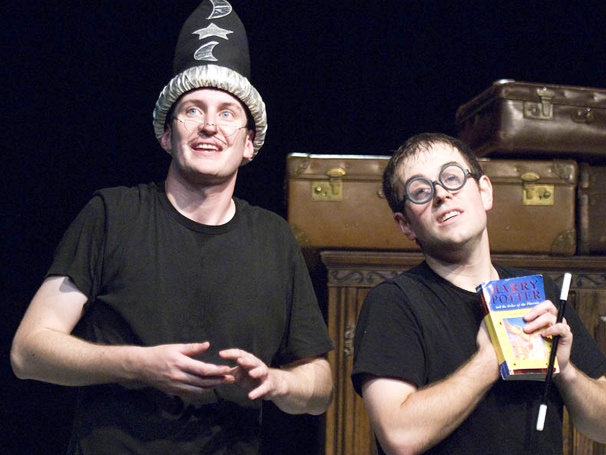
In Potted Potter, Clarkson and Turner perform a retelling of all seven Harry Potter books in only 70 minutes, switching in and out of costumes, playing multiple characters, performing songs and even playing a game of Quidditch, complete with help from the audience.
Potted Potter features set design by Simon Scullion, lighting design by Tim Mascall, musical composition by Phil Innes, associate direction by Hanna Berrigan and stage management by Gilda Frost.
Glorious and goofy, Clarkson and Turner are the heart and soul of this production. Using wigs, glasses and other colorful costumes, Clarkson morphs into a number of Harry Potter’s colorful characters from Hermione Granger and Ron Weasley to Lord Voldemort and Professor Albus Dumbledore, while Turner acts as narrator and Harry Potter doppelganger. Even if you don’t know the difference between a “Horcrux” and a “Hufflepuff,” Potted Potter is designed to make anyone from the casual to the most avid Harry Potter fan roar with laughter. And while Potter Potter’s limited time frame means it is not a strict retelling of the Harry Potter story from start to finish, the show will nonetheless entertain audiences with snappy jokes, songs, silly string and a real live game of Quidditch (think volleyball) which engages the audience to join in on the fun.
Perfect for “ages six to Dumbledore (who is very old indeed),” Potted Potter isn’t just good for kids—it’s made specifically for them, with a light-hearted, G-rated spirit. Adults should be aware that during the live game of Quidditch played in the middle of each show, Clarkson and Turner choose two children to join them onstage and act as “seekers,” representing the audience, which has been broken into team “Gryffindor” and team “Slytherin.” Parents of kiddies eager to volunteer should note that while the winning seeker is offered chocolate, the loser is sprayed with a Super Soaker.
Wicked Witches Jackie Burns and Chandra Lee Schwartz Are Taking Your Questions!
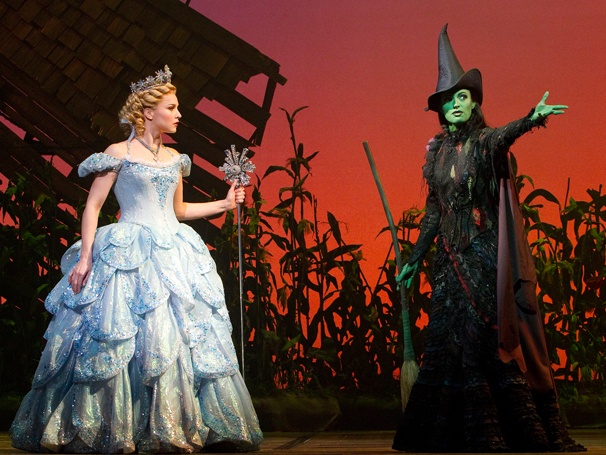
Wicked witches Glinda and Elphaba are one of Broadway’s most beloved pairs of besties, so Jackie Burns and Chandra Lee Schwartz are hitting the Broadway.com studio together for a special Wicked edition of Ask a Star! Do you want a behind-the-scenes scoop on life in Oz? Learn what it's like to get green, come and go by bubble and meet legions of Wicked-heads! Whatever it is you're curious about, go ahead and ask these stars!
Ask Now!
Wicked the Brodway Muscial

A vivid reimagining of the classic The Wizard of Oz, Wicked spotlights the untold stories of Oz’s most famous (or infamous) characters, namely the Wicked Witch of the West and her unlikely friend, Glinda the Good. The show follows green-skinned star Elphaba from birth to college and through the life-changing events which eventually label her “wicked,” introducing spoiled rich girl Glinda, local prince and heartthrob Fiyero and even the Wizard of Oz himself, a troubled man very unlike the one you may remember. As Elphaba, a passionate political activist if there ever was one, fights injustice and seeks to undo the mistakes of the past, dark secrets and personal tragedies shape the history of Oz, paying homage to the classic Wizard of Oz story while simultaneously changing fans’ understanding of it forever. A cautionary tale about love, friendship and trust, Wicked effortlessly reveals that there are indeed two sides to every story.
Should I See It?

Visually stunning, Wicked boasts a soaring score from Stephen Schwartz (Godspell, Pippin), Tony Award winning sets and costumes and some of the most gravity-defying moments the Great White Way.
Is Wicked Good for Kids?
Like the The Wizard of Oz, Wicked is the definition of family-friendly. And like the classic 1939 movie, younger children may find it too long or be frightened by the show's flying monkeys, allusions to offstage violence and death of a character. Most children over eight, however, will be delighted by the world of Wicked.
Revamped Theatre Royal Stratford East website to live-stream rehearsals
Theatre Royal Stratford East is to stream activity from its rehearsal
room live on its new website so that audiences can see what is
happening inside the venue.
The decision to live-stream video from different parts of the building is part of a wider move by the east London theatre to make its redesigned website more “democratic”. Theatre Royal artistic director Kerry Michael said the new video stream would act “like a shop window”.
Rather than listing upcoming productions, Theatre Royal’s new homepage asks visitors to choose from one of four statements - I would like to see what’s on, I would like to join the conversation, I would like to explore your channel or I would like to get involved. The different options then give viewers opportunities to see videos made by the theatre and to upload their own video content and post their views on theatre and other issues, as well as buying tickets.
Michael said staff at the venue were viewing the website as the organisation’s “third space” alongside the main stage and the bar.
He explained: “Yes, it’s about selling tickets, but it is also about finding a virtual way you can engage with our organisation. People talk about how exciting it is to hang out in our bar, or how good our access programmes are, or how political we are in our debates and that is now represented in a virtual way.”
Michael said the ideas for the new website grew out of the theatre’s work on the Open Stages project, in which the team handed programming power over to audiences. Creating a web channel also follows the organisation’s other online work, such as selling tickets directly through Facebook and establishing a ‘tweet zone’ in its auditorium so audience members in certain seats can post responses to a show as it is happening. He said he had “upset a lot of people” by creating the tweet zones, but believed that embracing change was part of the venue’s ethos.
He said: “Something that this theatre has always done is change and evolve and be at the heart of change and it’s more pertinent now with what’s happening around us with the Olympics. Joan Littlewood and Philip Hedley have set this theatre on this rhythm which is constantly about trying to move forward, and that is what I have inherited and what we are trying to do. This is one bit of that.”
Most of the website has now gone live, with some features - including the live-streaming - to follow. Michael said he hoped the new site “will have a life of its own” and that people use it as a resource. “It’s not always about leading back to Theatre Royal Stratford East,” he added.
The decision to live-stream video from different parts of the building is part of a wider move by the east London theatre to make its redesigned website more “democratic”. Theatre Royal artistic director Kerry Michael said the new video stream would act “like a shop window”.
Rather than listing upcoming productions, Theatre Royal’s new homepage asks visitors to choose from one of four statements - I would like to see what’s on, I would like to join the conversation, I would like to explore your channel or I would like to get involved. The different options then give viewers opportunities to see videos made by the theatre and to upload their own video content and post their views on theatre and other issues, as well as buying tickets.
Michael said staff at the venue were viewing the website as the organisation’s “third space” alongside the main stage and the bar.
He explained: “Yes, it’s about selling tickets, but it is also about finding a virtual way you can engage with our organisation. People talk about how exciting it is to hang out in our bar, or how good our access programmes are, or how political we are in our debates and that is now represented in a virtual way.”
Michael said the ideas for the new website grew out of the theatre’s work on the Open Stages project, in which the team handed programming power over to audiences. Creating a web channel also follows the organisation’s other online work, such as selling tickets directly through Facebook and establishing a ‘tweet zone’ in its auditorium so audience members in certain seats can post responses to a show as it is happening. He said he had “upset a lot of people” by creating the tweet zones, but believed that embracing change was part of the venue’s ethos.
He said: “Something that this theatre has always done is change and evolve and be at the heart of change and it’s more pertinent now with what’s happening around us with the Olympics. Joan Littlewood and Philip Hedley have set this theatre on this rhythm which is constantly about trying to move forward, and that is what I have inherited and what we are trying to do. This is one bit of that.”
Most of the website has now gone live, with some features - including the live-streaming - to follow. Michael said he hoped the new site “will have a life of its own” and that people use it as a resource. “It’s not always about leading back to Theatre Royal Stratford East,” he added.
Streetcar's Daphne Rubin-Vega Relishes Wounded and Resilient Characters

Audiences during a recent performance of A Streetcar Named Desire got a glimpse of what actress Daphne Rubin-Vega calls her "commando Chihuahua" mode, when she walked up to a theatregoer in the first row, reached out her hand and silently demanded the woman give up her phone.
"She was engaging in what I call Blair porn" — trying to photograph the actor playing Stanley, Blair Underwood.
The irony is not lost on Rubin-Vega that she took away the phone while playing Stella — indeed, that the confrontation began during a scene when her sister Blanche all but calls Stella a doormat.
"I don't think of Stella as a doormat, although I understand why people say that," Rubin-Vega says in her dressing room at the Broadhurst, where the Tennessee Williams classic is slated to run through July 22. "She's a fighter, but she's also a forgiver." Stella has her flaws, the actress says, but for her fifth role on Broadway, "it's nice to be a character who doesn't have a drug or alcohol problem."
Daphne Rubin-Vega debuted on Broadway at age 26 originating the role of Mimi, the drug-addicted stripper with AIDS, in Jonathan Larson's Rent, for which she was nominated for a Best Actress Tony. People still recognize her on the street from that part 16 years ago. "I was very proud that we brought in both the blue hairs and the pink hairs" — a diversity of audiences that Rubin-Vega says is also the hallmark of her current show.
Since Mimi, Rubin-Vega has played, among others, Conchita in Anna in the Tropics (earning her a second Tony nomination) and Fantine in Les Misérables — wonderful but wounded characters.
"Those are the jobs I get offered," she says simply.
"She hasn't received the notice she deserves," says Emily Mann, who directed her in both Streetcar and Anna in the Tropics. Rubin-Vega says of her career: "It's been a bumpy ride."
What characters would she want to play?
 |  | |
| Rubin-Vega in Rent. |
There is another character she would like to play, she says: "I am in the process of writing her."
The actress has been putting together a solo show with original songs, Frequently Unanswered Questions, that will be produced by the LAByrinth Theater Company.
"I started writing it after finding a letter that my mother had written when she had been in this country for a year." She keeps several pictures of her mother, Daphne Corina, on her dressing room table — one as a young mother newly divorced, having brought her two-year-old daughter Daphne and her older children to the U.S. from Panama. Daphne Corina died when her daughter was 10. "I'm older now than my mother ever was," says Rubin-Vega, 42, her face a lesson in sorrow.
"How did I get here?" is the central question Rubin-Vega hopes to address in her solo show.
Streetcar, which is having a longer run than originally intended, has pushed aside that solo show for the moment. "Streetcar's my heavy lifting, aside from being a mom," says Rubin-Vega. She lifts both together by running lines with her son — not yet including the most famous and most challenging scene, where Stanley stands at the foot of the stairs and yells "Stellaaaaa!" She laughs in delight as she plays back one such session that she recorded on a cell phone. (Not the phone she confiscated from the stage. That one was eventually returned.)
‘Sunshine’ in Different Sizes

This sight is even funnier if you place Mr. DeVito, thus attired, next to Richard Griffiths in a pinstriped suit and a fedora (accessorized with flashes of red that pick up on the colors of Mr. DeVito’s pajamas). Why is this funny? Well, for starters, Mr. DeVito and Mr. Griffiths – who are starring in Neil Simon’s “Sunshine Boys” at the Savoy Theater – are both anatomically improbable figures.
Mr. DeVito is uncommonly short, with the dimensions of a swollen fire hydrant. Mr. Griffiths is imposingly tall, and has the central circumference of a dining table for four. They seem to belong to different species, yet they also look alike, in the way dogs are said to come to resemble their owners.
Together, they make up one inevitable and impossible equation. That’s comedy, folks. And it’s one of the reasons that Thea Sharrock’s production of “The Sunshine Boys,” first staged on Broadway in 1972, works so incredibly well.
It helps of course that Mr. Griffiths (a Tony winner for “The History Boys”) and Mr. DeVito (an Emmy winner for “Taxi”), playing the long-estranged comedy team known as Lewis and Clark, find the singular souls that match their characters’ appearances. And in doing so, they provide a telling anatomy of the sources and substance of Mr. Simon’s success as a playwright.
Mr. Simon’s plays, even the romantically wistful ones like “Barefoot in the Park” and “Brighton Beach Memoirs,” have always moved to a vaudeville beat, to the unheard punctuation of rim shots and the pauses of holding for laughs. Wisecracks are the glue that keeps families and friends together in his universe, allowing them to express love and hate without killing one another.
“The Sunshine Boys” strips that sensibility to its basics and reveals the raw hostility at its core. It also celebrates the clown’s classic gift for turning anger into art. Estranged for more than a decade when the play begins, after having worked together for 40-some years, Al Lewis (Mr. Griffiths) and Willie Clark (Mr. DeVito), really, really don’t like each other. But each knows how darn good the other is professionally, and that they somehow complete each other on a stage.
In tracing the rocky road to a one-shot-only television reunion of Lewis and Clark, Mr. Griffiths and Mr. DeVito provide exact and disciplined portraits of exact and disciplined professionals. The comic metabolisms they embody are as different as can be, and they clash in perfect harmony.
All fire and fury, Mr. DeVito’s Willie brings to mind that immortal specimen of Looney Toons zoology, the Tasmanian Devil. Even immobile, he seems to be spinning and shooting off sparks. Mr. Griffiths is the phlegm to Mr. DeVito’s spleen. His Al Lewis is weighed down by a gravity that’s compounded of his own substantial flesh and an aggrieved sadness to match.
That doesn’t mean that Al can’t hold his own against Willie, on or off stage. And when you finally get to see Lewis and Clark perform one of their famous sketches – the one about the doctor and the tax auditor – you understand perfectly why comedy is destiny for these two, and vice versa.
The face of Mr. Griffiths (whose American accent is irreproachable, by the way) often seems frozen on the verge of both cascading tears and convulsive laughter, which sums up the spirit of the play. The choice is always laughter for Mr. Simon. But this insightful production, surprisingly delicate in its broadness, implies that it could always go the other way, too.
Mr. Simon uses comedy to keep the hounds of chaos at bay. Joe Orton’s plays let those dogs out to rampage and attack. On the same day I saw “The Sunshine Boys,” I attended a matinee of “What the Butler Saw,” Orton’s ultimate Dionysian farce (and final play), across the street at the Vaudeville Theater. (Can that be right, the Vaudeville Theater? Yep, I just double-checked.)
“Butler” is the second work I’ve seen on this trip (after Durrenmatt’s “Physicists” at the Donmar Warehouse) to be set in a mental institution. But Orton doesn’t rework the threadbare dichotomy of sane mad people and demented doctors. Everybody’s crazy in his universe, because everybody belongs to the same absurd social order.
Orton’s anarchy has to be delivered by performers who appear to believe unconditionally in their characters’ irrefutable logic, rather in the way that closet drunks pretend to be sober. Sean Foley’s revival – which stars Tim McInnerny and Samantha Bond as a psychiatrist and his sexually thwarted wife – is sometimes too self-consciously madcap.
Still it was a pleasure to listen once again to some of the most elegantly subversive epigrams this side of Oscar Wilde. (“Have you taken up transvestism? I’d no idea our marriage teetered on the edge of fashion?”) And during a theater-going marathon that has included Greek tragedy, Jacobean revenge plays, drawing-room comedy and high farce, it was deeply, symmetrically satisfying to enter a world that manages to incorporate and explode elements from every one of those genres, and then some.
“Triassic Parq the Musical’ at SoHo Playhouse
“Triassic Parq the Musical” is overproduced and scattershot and a little bit desperate. It is also more than a little bit fun.
This bawdy tribute to dinosaurs and their newfound genitalia doesn’t particularly make sense, and the would-be cult-classic onslaught at the very beginning — a naughty preshow announcement, a belabored gag with a white guy impersonating Morgan Freeman — has the “Laugh! I said laugh!!” hard sell of far too many New York International Fringe Festival transfers. (This one won an award for best musical at the 2010 festival.)
But give the authors, Marshall Pailet, Bryce Norbitz and Stephen Wargo, a little time. Their material eventually settles into a contentedly sophomoric vibe, happy to show off here and pander there. There are worse things than seeing clever people try too hard.

All three wrote the book and lyrics, which focus on the heretofore all-female Triassic Parq, an extremely thinly veiled version of a certain fictional dinosaur theme park, being thrown into a tizzy when one of the T. rexes (Claire Neumann) morphs from a she-rex to a he-rex. Appetites carnal and otherwise get the better of the characters, “Spring Awakening” style, as a wide-eyed young velociraptor (an endearing Alex Wyse) tries to make sense of it all.
The score by Mr. Pailet has at least two power ballads too many, although it also boasts the least embarrassing hip-hop number within a conventional book musical in recent memory. (Here and throughout, Lindsay Nicole Chambers is both shameless and priceless as an exiled raptor.)
Mr. Pailet also directed, packing multiple so-so jokes onto the stage when one genuinely funny example would suffice. But much is forgiven after a flat-out ingenious mirror-image sequence — think of Groucho and Harpo Marx in “Duck Soup,” except with rippling water and a giant penis. Better still, try not to think of that. If you can’t help it, perhaps “Triassic Parq” is for you.
This bawdy tribute to dinosaurs and their newfound genitalia doesn’t particularly make sense, and the would-be cult-classic onslaught at the very beginning — a naughty preshow announcement, a belabored gag with a white guy impersonating Morgan Freeman — has the “Laugh! I said laugh!!” hard sell of far too many New York International Fringe Festival transfers. (This one won an award for best musical at the 2010 festival.)
But give the authors, Marshall Pailet, Bryce Norbitz and Stephen Wargo, a little time. Their material eventually settles into a contentedly sophomoric vibe, happy to show off here and pander there. There are worse things than seeing clever people try too hard.

All three wrote the book and lyrics, which focus on the heretofore all-female Triassic Parq, an extremely thinly veiled version of a certain fictional dinosaur theme park, being thrown into a tizzy when one of the T. rexes (Claire Neumann) morphs from a she-rex to a he-rex. Appetites carnal and otherwise get the better of the characters, “Spring Awakening” style, as a wide-eyed young velociraptor (an endearing Alex Wyse) tries to make sense of it all.
The score by Mr. Pailet has at least two power ballads too many, although it also boasts the least embarrassing hip-hop number within a conventional book musical in recent memory. (Here and throughout, Lindsay Nicole Chambers is both shameless and priceless as an exiled raptor.)
Mr. Pailet also directed, packing multiple so-so jokes onto the stage when one genuinely funny example would suffice. But much is forgiven after a flat-out ingenious mirror-image sequence — think of Groucho and Harpo Marx in “Duck Soup,” except with rippling water and a giant penis. Better still, try not to think of that. If you can’t help it, perhaps “Triassic Parq” is for you.
Shoshana Bean Offers One-Night-Only L.A. Concert
Shoshana Bean
Singer-actress Shoshana Bean, who has been seen on Broadway in Wicked and Hairspray, will release hersophomore album this fall. In anticipation of the release, she debuts new material July 3 at the Rockwell Stage in Los Feliz.
The concert begins at 9 PM. Each ticket purchased comes with a signed copy of Bean's upcoming CD due in September.
According to press notes, "The band has grown for this one-night-only event and, in addition to the usual suspects, will feature a three-piece horn section, piano and organ as well as a mini-choir!! 100% of every ticket purchased goes towards the project and also earns you an advanced copy of the album prior to its release in the fall. This will be Shoshana's one and only appearance in Los Angeles for the entire summer; do NOT miss your last opportunity to worship and contribute to the making of her second album!"
The project, which is currently untitled, has launched a Kickstarter fundraising campaign, which offers a variety of rewards and incentives for fans and supporters who contribute to the album's development.
Rewards for contributing to Bean's Kickstarter include vinyl copies of the album, one-on-one Skype or phone conversations with the performer, private singing lessons, visits to the recording studio, a custom-written song and a limo ride with Bean to the New York or Los Angeles album release party, among others. Visit Bean's Kickstarter here.
Bean's first album "Superhero," which debuted in 2008, reached No. 5 on the iTunes R&B charts, and the title track received an Independent Music Award for Best R&B Song. The performer made her Broadway debut in the original cast of Hairspray and is best known for playing Elphaba in Wicked.
Singer-actress Shoshana Bean, who has been seen on Broadway in Wicked and Hairspray, will release hersophomore album this fall. In anticipation of the release, she debuts new material July 3 at the Rockwell Stage in Los Feliz.
The concert begins at 9 PM. Each ticket purchased comes with a signed copy of Bean's upcoming CD due in September.
According to press notes, "The band has grown for this one-night-only event and, in addition to the usual suspects, will feature a three-piece horn section, piano and organ as well as a mini-choir!! 100% of every ticket purchased goes towards the project and also earns you an advanced copy of the album prior to its release in the fall. This will be Shoshana's one and only appearance in Los Angeles for the entire summer; do NOT miss your last opportunity to worship and contribute to the making of her second album!"
The project, which is currently untitled, has launched a Kickstarter fundraising campaign, which offers a variety of rewards and incentives for fans and supporters who contribute to the album's development.
Rewards for contributing to Bean's Kickstarter include vinyl copies of the album, one-on-one Skype or phone conversations with the performer, private singing lessons, visits to the recording studio, a custom-written song and a limo ride with Bean to the New York or Los Angeles album release party, among others. Visit Bean's Kickstarter here.
Bean's first album "Superhero," which debuted in 2008, reached No. 5 on the iTunes R&B charts, and the title track received an Independent Music Award for Best R&B Song. The performer made her Broadway debut in the original cast of Hairspray and is best known for playing Elphaba in Wicked.
Tony Winner John Lloyd Young Returns to Broadway
John Lloyd Young, who won a Tony Award for Best Actor in a Musical for creating the role of Frankie Valli in Broadway's Jersey Boys, returns to that Tony-winning Best Musical for a limited engagement beginning July 3.
Young, who also won Drama Desk, Outer Critics Circle and Theatre World awards, will continue in the role through Sept. 30 at the August Wilson Theatre.
He joins a cast that features Matt Bogart (Nick Massi), Quinn VanAntwerp (Bob Gaudio) and Andy Karl (Tommy DeVito) as The Four Seasons; with Peter Gregus and Mark Lotito. The company also includes Miles Aubrey, Erik Bates, Jared Bradshaw, Cara Cooper, Ken Dow, John Edwards, Russell Fischer, Katie O’Toole, Joe Payne, Jessica Rush, Dominic Scaglione Jr., Nathan Scherich, Sara Schmidt and Taylor Sternberg.
Jersey Boys is written by Marshall Brickman and Rick Elice, with music by Bob Gaudio, lyrics by Bob Crewe, direction by two-time Tony Award winner Des McAnuff and choreography by Sergio Trujillo.
The musical, according to press notes, "is the story of Frankie Valli and The Four Seasons: Frankie Valli, Bob Gaudio, Tommy DeVito and Nick Massi, about a group of blue-collar boys from the wrong side of the tracks who became one of the biggest American pop music sensations of all time. They wrote their own songs, invented their own sounds and sold 175 million records worldwide - all before they were thirty." The show features “Sherry,” “Big Girls Don’t Cry,” “Oh What A Night,” “Walk Like A Man,” “Can’t Take My Eyes Off You” and “Working My Way Back To You.”
Jersey Boys is the recipient of the 2006 Tony Award for Best Musical and the 2009 Olivier Award for Best Musical. The Original Broadway Cast Recording, produced by Bob Gaudio, received the 2006 Grammy Award for Best Musical Show Album and has been certified Platinum by the Recording Industry Association of America (RIAA). The Broadway production also won the 2006 Outer Critics Circle & Drama League Awards for Best Musical.
Young, who also won Drama Desk, Outer Critics Circle and Theatre World awards, will continue in the role through Sept. 30 at the August Wilson Theatre.
He joins a cast that features Matt Bogart (Nick Massi), Quinn VanAntwerp (Bob Gaudio) and Andy Karl (Tommy DeVito) as The Four Seasons; with Peter Gregus and Mark Lotito. The company also includes Miles Aubrey, Erik Bates, Jared Bradshaw, Cara Cooper, Ken Dow, John Edwards, Russell Fischer, Katie O’Toole, Joe Payne, Jessica Rush, Dominic Scaglione Jr., Nathan Scherich, Sara Schmidt and Taylor Sternberg.
Jersey Boys is written by Marshall Brickman and Rick Elice, with music by Bob Gaudio, lyrics by Bob Crewe, direction by two-time Tony Award winner Des McAnuff and choreography by Sergio Trujillo.
The musical, according to press notes, "is the story of Frankie Valli and The Four Seasons: Frankie Valli, Bob Gaudio, Tommy DeVito and Nick Massi, about a group of blue-collar boys from the wrong side of the tracks who became one of the biggest American pop music sensations of all time. They wrote their own songs, invented their own sounds and sold 175 million records worldwide - all before they were thirty." The show features “Sherry,” “Big Girls Don’t Cry,” “Oh What A Night,” “Walk Like A Man,” “Can’t Take My Eyes Off You” and “Working My Way Back To You.”
Jersey Boys is the recipient of the 2006 Tony Award for Best Musical and the 2009 Olivier Award for Best Musical. The Original Broadway Cast Recording, produced by Bob Gaudio, received the 2006 Grammy Award for Best Musical Show Album and has been certified Platinum by the Recording Industry Association of America (RIAA). The Broadway production also won the 2006 Outer Critics Circle & Drama League Awards for Best Musical.
Sunday, July 1, 2012
Harvey. Review by Matthew Murray
 Jim Parsons Photo by Joan Marcus |
At first you may think that Parsons is trying to do the same thing. When he initially enters deep into the play's first scene, bearing a slightly dopey, puffed-cheek expression, he appears poised to highlight to excess Elwood's eccentricities (which include expecting the best of everyone and always taking others at their word). But no: The actor — best known from TV's The Big Bang Theory, though he also made an impressive Broadway debut in last season's revival of The Normal Heart — never looks down on his character. As soon as he starts interacting with his sister Veta (Jessica Hecht), her daughter Myrtle Mae (Tracee Chimo), who live with him in his house, and the myriad others to whom he always hands out business cards and from whom he politely requests a visit or phone call, it's clear that this is who Elwood is: dazed and deluded, yes, but also an ideal to which everyone should aspire. We see Elwood as different because of his utter lack of guile: Parsons makes him feel wrong by making him so incredibly right.
This fulfills the role's most important goal, and makes us inhabitants of the world that wants to normalize Elwood. Veta is our representative — she knows about Harvey all too well and hates him (and especially his impact on her social calendar), to the extent that she checks her brother into Chumley's Rest Sanitarium. Of course, the situation is too zany for even the people there to accept, and on-call physician Lyman Sanderson (Morgan Spector) commits Veta instead, which sets off a chain reaction of mistakes and confusions that eventually embroil everyone, including the especially fascinated lead doctor William Chumley (Charles Kimbrough), in the insanity. Elwood's state of mind that can only be cured, it turns out, with a shot of a certain drug that, Veta and everyone else is assured, will succeed in making Elwood just like everyone else — assuming they can convince him to take it and convince themselves it's really for the best.
Elements of farce liberally pepper the plentiful slapstick, so entertainment is never an issue, and Ellis stages many of those moments well on David Rockwell's two appropriately elegant-silly sets (one for Elwood's house and one for the sanitarium). But the property's ubiquity, particularly thanks to the faithful and famous 1950 film starring James Stewart, has dulled a lot of the sharper edges that likely once cut more deeply. If you're not continually faced throughout the first act with the question of whether Harvey's real — and, if so, why he's involved — tension is rare, and the plot's machinations lose their urgency as you wait for everyone onstage to catch up. This makes it even more important that the direction and performances, especially in the central roles surrounding Elwood, are pitched precisely enough to guide the story to its heightened emotional endpoint.
 Jim Parsons, Angela Paton, Jessica Hecht, and Tracee Chimo. Photo by Joan Marcus |
In the final scene, however, everyone delivers — especially Hecht, who is at her most honest and affecting when Veta faces up to how much she wants to change Elwood — and you learn why Harvey has endured 67 years since its Broadway premiere (and 42 since its last revival). This is a play about the most human of feelings and failings, and how we deal with them (and not always well); most of us need reminders about the ways our choices influence others, and the importance of sacrifice to contribute to a more peaceful and useful world — even of the things we think are most important to us. The deeper you dig, Chase tells us, the more you may discover that your misconceptions are, and have always been, wrong.
"'In this world, Elwood,'" says Mr. Dowd late in the evening, recalling the words of his mother, "'you must be oh, so smart or oh, so pleasant.' For years I was smart. I recommend pleasant." That line may get a hearty laugh, even today, and after all the behavior you've seen to that point from both Elwood and others, it's understandable. But because we all either know or are an Elwood, those words resound just as much as a description of the play itself. It may present itself as pleasant, but it's far smarter — and more wrenching — than it's often credited with being.
The Anarchist (Lyceum Theatre)
WHAT IS IT ABOUT?
Passion. Deception. Religion.
Revolution. These thrilling topics and more are brought to light in
the world premiere of this provocative two-hander by David Mamet.
Two-time Tony Award winner Patti LuPone, will go head-to-head with
three-time Oscar nominee Debra Winger, as two powerful women forced to
engage in a cage match of wits. Mamet, who brought a fierce sense of
pace and entertainment to the direction of his own Race, will be at the
helm of this theatrical event.
Synopsis:
A female prisoner, who was once part of a Weather Underground-like radical group, pleads her case for parole with the warden.
Subscribe to:
Comments (Atom)